24 June 2026
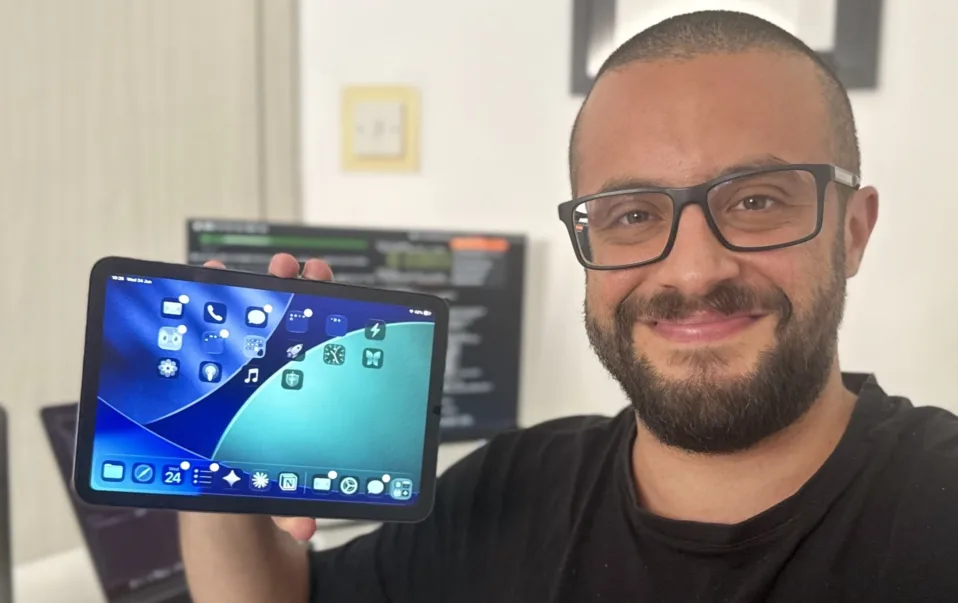
Apple held WWDC 2026 from June 8 to 12. Google I/O 2026 took place a few weeks earlier, on May 19 and 20. Between them, hundreds of announcements were made for developers. Most of it has no bearing on how your app runs or how it's perceived in the App Store or Play Store. Here's what does.
Last year's Liquid Glass redesign introduced contrast and legibility issues in some interfaces. iOS 27 addresses this directly. Apple is changing how the material renders behind complex content, and adding a slider so users can set Liquid Glass anywhere from fully clear to fully tinted.
If your app uses custom UI built on top of Liquid Glass, it should be reviewed against the updated compositing pipeline before iOS 27 ships this autumn. If you built workarounds for last year's contrast problems, they may no longer be needed, but this needs testing rather than assuming.
With iOS 27, Apple is pushing Siri and Spotlight as entry points into apps, rather than the home screen icon. For an app to be reachable this way, it needs to expose its functionality through Apple's AppIntents and AppEntities frameworks. Apps that don't do this stay invisible to Siri, Spotlight, and visual intelligence, even if the functionality already exists internally.
This is something worth evaluating for each app case by case. Apps with clearly defined actions (booking, searching, tracking, ordering) stand to benefit most. Get in touch if you'd like us to assess whether this applies to your app.
Apple Intelligence stays limited to newer hardware, and isn't live in the EU yet.
The most advanced on-device model coming with iOS 27 requires at least 12GB of RAM, an A19 Pro chip on iPhone, an M4 chip on iPad, or an M3 chip on Mac. In practice, this limits these features to recent, higher-end devices. Separately, Apple has confirmed that Siri's AI capabilities are not launching in the EU on iOS 27 and iPadOS 27 at this time, citing the Digital Markets Act. This includes Malta. Apple says the functionality will be available in the EU on macOS 27 and visionOS 27.
If you're planning to market features tied to Apple Intelligence or the new Siri, factor in that a meaningful share of your users, including everyone on iPhone and iPad in the EU, won't have access to them at launch.
Starting August 31, 2026, all new app submissions and updates on Google Play must target Android 16 (API level 36) or higher. Apps that don't target at least Android 15 (API level 34) will stop appearing to new users on devices running newer Android versions. Existing installs aren't affected.
This is the same yearly requirement we covered last year for the SDK 35 deadline. If your app's target API level hasn't moved since then, this is the point to plan it in.
Beyond the deadline above, Android 17 introduces changes worth testing now, ahead of them becoming mandatory:
These can be tested today on the Android 17 beta or the latest emulator images, before the changes apply to your app's target API level.
Google has formally declared Android development "Compose-first." All new APIs, libraries, and guidance going forward target Jetpack Compose. Apps built on the older View/XML system will continue to run, but that system won't receive further active development.
If your app's codebase still relies heavily on Views, this is worth factoring into any planned redevelopment or major feature work, rather than addressing it later as a separate migration.
Mirroring Apple's AppIntents, Google introduced AppFunctions, a platform API that lets an app expose its functionality to Gemini and other AI agents, similar to an on-device MCP server. Integration with Gemini is currently in private preview, but the API and accompanying Jetpack library are already available.
Both Apple and Google are pushing AI agents, Siri and Gemini respectively, as a new way for users to reach app functionality, separate from the app icon. Neither requires immediate action, but apps that don't adopt these frameworks risk becoming invisible to a growing share of how people use their devices.
On the more immediate side: the August 31 Android target API deadline isn't optional, and Liquid Glass adjustments are worth testing ahead of iOS 27's release this autumn.
If you're unsure how any of this applies to your app, or would like a review, get in touch. We'll guide you through what's relevant and help you plan what needs to be done.
Latest Blog Posts //